




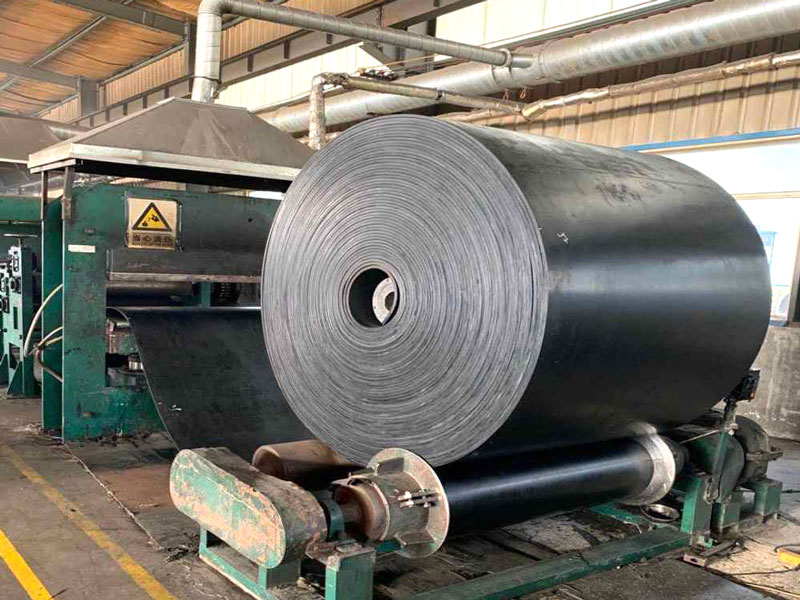
The belt is the core, flexible backbone of a belt-type bucket elevator. It serves as the continuous loop that bears the entire load—both the weight of the attached buckets and the bulk material being conveyed vertically. Unlike a chain drive, a belt system offers a unique combination of quiet operation, smooth movement, and high-speed capability.
WhatsApp: +8618764293079
Email: mwinbelt@qdmwingroup.com
Chinese Best Quality Heavy Duty Bucket Elevator Rubber Belt Factory
The belt is the core, flexible backbone of a belt-type bucket elevator. It serves as the continuous loop that bears the entire load—both the weight of the attached buckets and the bulk material being conveyed vertically. Unlike a chain drive, a belt system offers a unique combination of quiet operation, smooth movement, and high-speed capability.
1. Load-Bearing Structure: It must withstand the constant tensile forces from the loaded buckets and the material weight.
2. Traction Element: It transmits the driving force from the head pulley (drive pulley) to the entire assembly, pulling the buckets through the elevator’s casing.
3. Bucket Mounting Surface: Buckets are securely bolted or attached to the belt at precise intervals.
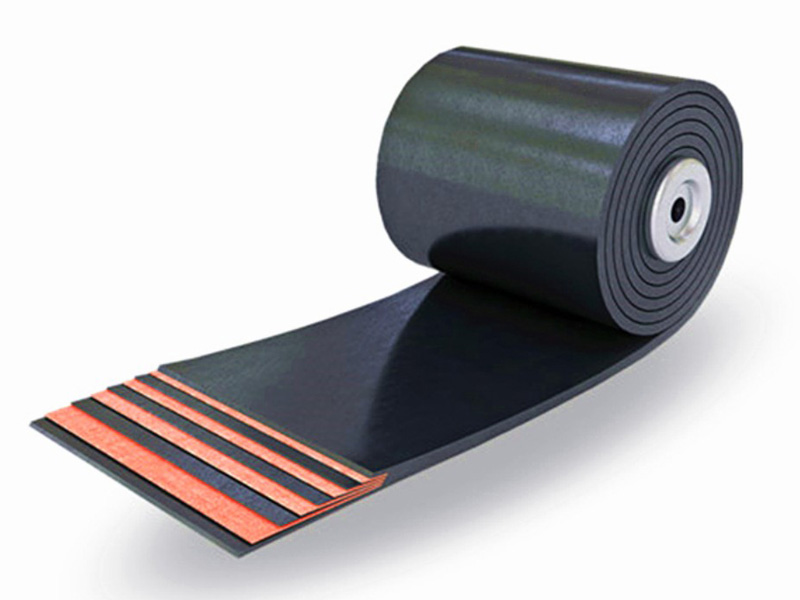
Fabric Ply Belts (Multi-Ply): Made with multiple layers (ply) of fabric (like polyester or nylon) bonded with rubber. They offer good flexibility and impact resistance for general-duty applications.
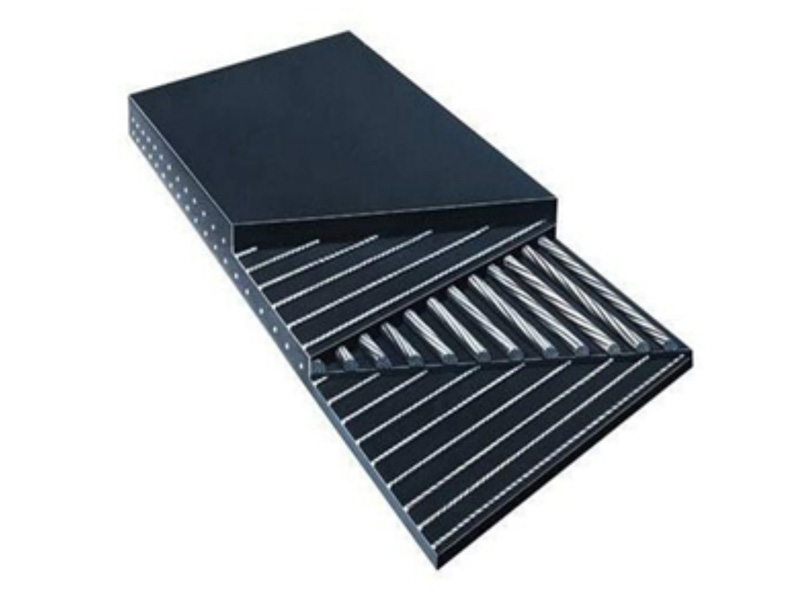
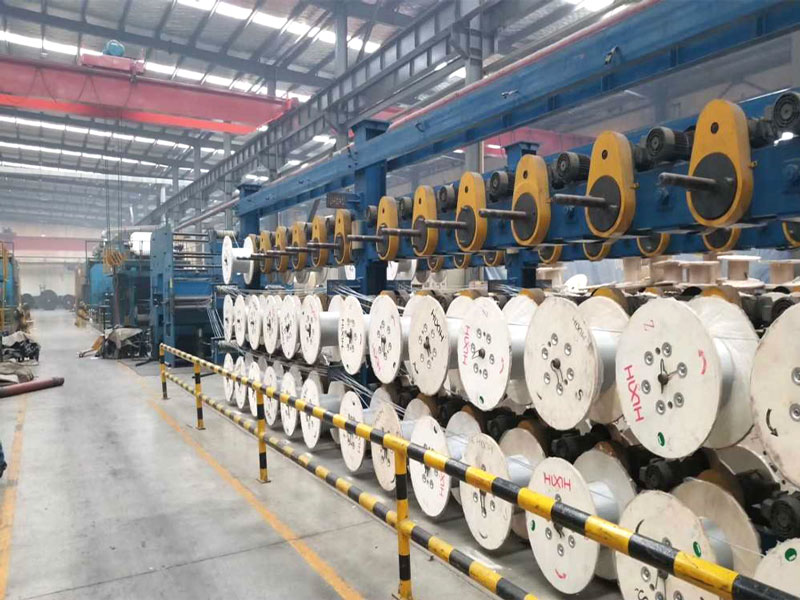
Steel Cord Belts: Incorporate a single layer of embedded steel cables for exceptional tensile strength with minimal stretch. This is the preferred choice for high-capacity, long-center, and heavy-duty elevators (e.g., in grain, cement, or mining).
Solid Woven Belts: Made from woven fabric impregnated with PVC or other compounds. They are resistant to fire, moisture, and abrasion in certain environments.
High Tensile Strength: To handle the load without breaking.
Low Elongation (Stretch): Especially important for steel cord belts to maintain proper tension and bucket spacing.
Abrasion & Tear Resistance: To withstand wear from material spillage and friction.
Oil & Chemical Resistance: Depending on the material being handled (e.g., certain fertilizers or industrial products).
Pulley Grip (Friction): The top cover must provide sufficient friction with the drive pulley to prevent slippage.
Flex Fatigue Resistance: It must endure constant bending around the head and tail pulleys without cracking.
Proper Tensioning: Crucial to prevent slippage on the drive pulley and ensure smooth operation.
Tracking: The belt must be correctly aligned (tracked) to avoid running off the pulleys.
Pulley Lagging: Drive pulleys are often covered with rubber (lagging) to increase friction and grip.
Material & Environment: The belt must be selected based on the material’s properties (abrasive, oily, hot, etc.) and the operating climate.
In summary, the bucket elevator belt is a highly engineered component that balances strength, flexibility, and durability. Its correct selection and maintenance are paramount for the elevator’s efficiency, capacity, and long-term reliability.
| Strength Technical Data | Tensile Strength (N/mm) | Steel Cord Diameter (mm) | Steel Cord Pitch(mm) | Top Cover (mm) | Bottom cover(mm) | Weight (Kg/M) |
| ST800 | 800 | 3.5 | 10 | 5 | 5 | 19.5 |
| ST1000 | 1000 | 4.0 | 12 | 6 | 5 | 22.4 |
| ST1250 | 1250 | 4.5 | 12 | 6 | 6 | 24 |
| ST1600 | 1600 | 5.0 | 12 | 6 | 6 | 25.9 |
| ST2000 | 2000 | 6.0 | 12 | 6 | 6 | 31.8 |
| ST2500 | 2500 | 7.2 | 15 | 6 | 6 | 36.1 |
| ST3150 | 3150 | 8.1 | 15 | 8 | 8 | 40.4 |
| ST3500 | 3500 | 8.6 | 15 | 8 | 8 | 43.8 |
| ST4000 | 4000 | 8.9 | 15 | 8 | 8 | 45 |
| ST4500 | 4500 | 9.7 | 16 | 8.5 | 8.5 | 46.7 |
| ST5000 | 5000 | 10.9 | 17 | 9 | 9 | 50.7 |
| ST5400 | 5400 | 11.3 | 17 | 10 | 10 | 53.4 |
| ST6300 | 6300 | 12.3 | 18 | 10 | 10 | 59.6 |
Remark:
| Rubber Cover Grade | Tensile Strength (Mpa) | Elongation at break (%) | Abrasion (mm3) |
| H | 24.0 | 450 | 120 |
| D | 18.0 | 400 | 100 |
| L | 15.0 | 350 | 200 |
| Standards | Cover Rubber | Adhesion | ||||
| Tensile Strength | Elongation at break | Abrasion | Cover to Ply | Cover to Ply | Ply to Ply | |
| DIN22102 | Mpa | % | mm3 | N/mm (≤1.5mm) |
N/mm (>1.5mm) |
N/mm |
| DIN 22102-Z | 15 | 350 | 250 | 3.5 | 4.5 | 5 |
| DIN 22102-W | 18 | 400 | 90 | 3.5 | 4.5 | 5 |
| DIN 22102-Y | 20 | 400 | 150 | 3.5 | 4.5 | 5 |
| DIN 22102-X | 25 | 450 | 120 | 3.5 | 4.5 | 5 |
| Standards | Cover Rubber | Adhesion | ||||
| Tensile Strength | Elongation at break | Abrasion | Cover to Ply | Cover to Ply | Ply to Ply | |
| AS 1332 | Mpa | % | mm3 | N/mm (≤1.9mm) |
N/mm (>1.9mm) |
N/mm |
| AS 1332-N17 | 17 | 400 | 200 | 4 | 4.8 | 6 |
| AS 1332-M24 | 24 | 450 | 125 | 4 | 4.8 | 6 |
We also could offer belt with cover grade in accordance to International standard such as DIN 22102, RMA, AS 1332, SABS 1173/2000, IS 1891, BS 490, JIS K 6322, etc.
Please Leave your message you want to know! We will respond to your inquiry within 24 hours!
Please Leave your message you want to know! We will respond to your inquiry within 24 hours!